
Embracing kindness
Unexpected reflections from an emergency room nursing report

After my discharge from Highland Hospital’s emergency department last month, I discovered that I had online access to all the clinical notes recorded during my three-night stay there.
That in itself is a small miracle of modern medicine. No guesswork about my tests or drugs or diagnoses, even if I was in too much of a daze at the time to remember much. But within the forty-two separate Triage Notes, Progress Notes, Consults, and Care Plans, one sentence struck me. It was a line written by a nurse after my first night there:
Pt is an extremely kind and cooperative patient eagerly using her incentive spirometer at bedside every hour while awake.
The “incentive spirometer” is a plastic device that I was told to inhale from—keeping little colored balls in the air, like a toddler toy—as a way to ensure I didn’t get pneumonia while my collapsed lung drained and recovered.
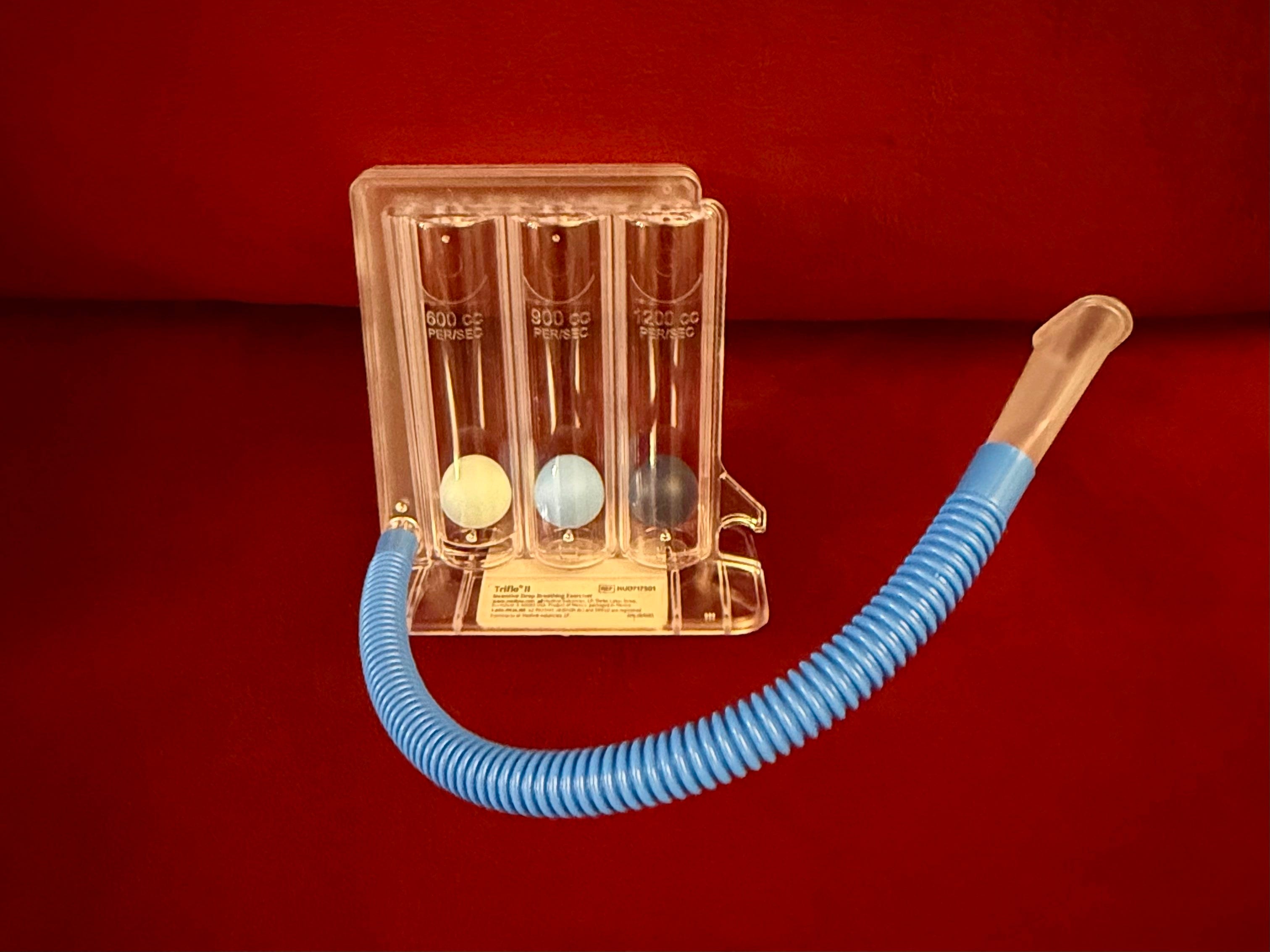
The spirometer wasn’t what struck me.
It was the adjective “kind.”
Until that moment, I had never imagined anyone describing me as “kind,” let alone “extremely kind.” It’s not a word I would have used to describe myself.
Here are some words I would have used: Smart. Organized. Verbal. Creative. Funny.
I might also have said empathetic or compassionate but, to me, those qualities are different from kind. They’re more abstract. They’re ways of thinking or feeling rather than behaviors.
Empathy: I’ve always been good at imagining other people’s lives: after all, that’s the entry ticket for being a fiction writer. And I’ve always felt compassion for underdogs, even if—especially if?—they’re as far away as Ukraine or Gaza.
But those things are different from kindness. Kindness to me consists of little actions that require attention and time—noticing when a co-worker feels bad and offering then a shoulder, befriending the awkward new kid in school, making thank-you cookies for the dentist’s staff. For much of my life those haven’t been my strong suit. I was too caught up in work or writing or you-name-it. Or I was more comfortable critiquing systemic injustice than making in-person overtures to a nearby human.
Coincidental to my thinking about kindness, it turns out that George Saunders is publishing a new novel, Vigil, this month. Saunders is one of my favorite writers: if I were a Pharoah, I’d want his Lincoln in the Bardo entombed with me in my pyramid. (Along with a half dozen Satsuma mandarin oranges.) Aside from acclaim as a writer and a teacher of writing, Saunders is known for a 2013 commencement address he delivered about… kindness.
It’s funny, humble, of course wonderfully written, and wise.
“What I regret most in my life are failures of kindness,” he said. “Those moments when another human being was there, in front of me, suffering, and I responded… sensibly. Reservedly. Mildly.”
There’s more. It’s only 11 minutes and it’s free on YouTube. Watch it or read it. (And then read this 2026 New York Times interview with him, where he revisits those decade-old remarks.)

Resting at home after my hospital stay, I wondered what led that nurse to describe me as kind. I hadn’t leapt up from my hospital bed like Super-Patient to donate blood, hadn’t borrowed the trash cart and gone around emptying everyone’s waste baskets. What I had done was hold several conversations with her overnight, where I asked about her family and sympathized with some of their challenges.
And here’s the weird thing: Her description of me as “kind” made me think of myself as kind. It made me want to be someone that people described as kind.
Puzzling about this, I composed a question for my Facebook friends:
When you are gone, which positive word do you hope people will say about you?
1. Boy, was s/he smart.
2. Boy, was s/he kind.
3. Boy, was s/he creative.
4. Boy, was s/he loyal.
5. Boy, was s/he successful.
6. Boy, was s/he idealistic.
7. Boy, was s/he hard-working.
8. Boy, was s/he strong.
9. Boy, was s/he gorgeous.
10. Boy, was s/he funny.
11. Boy, was s/he _________. (Fill in the blank but only with one word, so you can’t say “good at playing the ukulele.”)
Of the folks who responded, about one-third said “kind.” A couple more used words that were related to kind such as “loving” or “good.”
I realized that forty years ago, I would have wanted to be remembered as “smart.” I would have wanted to be remembered as (breaking my own one-word rule) “a great writer.”
Today I would want to be remembered as kind.
I suspect this is a getting-older thing. In George Saunders’ commencement speech, he theorized that most people get kinder as they age:
“We get our butts kicked by real life, and people come to our defense, and help us, and we learn that we’re not separate, and don’t want to be…. Most people, as they age, become less selfish and more loving.”
So it makes sense that, along with being kinder, we might come to value kindness more, both in ourselves and others.
The importance of kindness is especially apparent in our current political era where this narcissistic, power-obsessed president seems to know nothing other than being unkind. Our headlines blare one instance after another of his mean-spiritedness, from ridiculing people with disabilities and calling women reporters “pigs,” to blaming Rob and Michele Reiner for their own deaths, and this week vilifying Renee Good after her murder by a federal ICE agent.
We need more kindness in our world. It isn’t all we need—of course we need civil rights and checks on the presidency and universal health care and so many other things—but kindness is something each of us can accomplish while working toward those other goals.
Perhaps I am a little more kind than I was forty years ago, both for the reasons Saunders suggested and because, retired, I have more time and attention for others. But the nurse’s memo made me want to be intentional about it.
She saw me that way, and it made me want to be that way.
Is there a lesson we can draw from this, with other adults but especially with our children?
If we tell them they are kind—if we treat them as kind people—will they believe us? And then live their lives that way?
Love this post, Ilana. FWIW, I've always thought of you as one of the kindest people I know and have the blessing of being friends with. It's funny - I was thinking of this just tonight, on my way home from church and feeling more gentle with myself and others, I found myself taking the time to be kind to the Lyft driver and noticing how good it felt. A simple thing. Not just saying "hello" and "thank you" but taking a minute to ask how he was and seeing him as a person and not just a driver getting me from A to B. I'm ashamed to admit I don't always do that. So thanks for the reminder.
Very insightful.